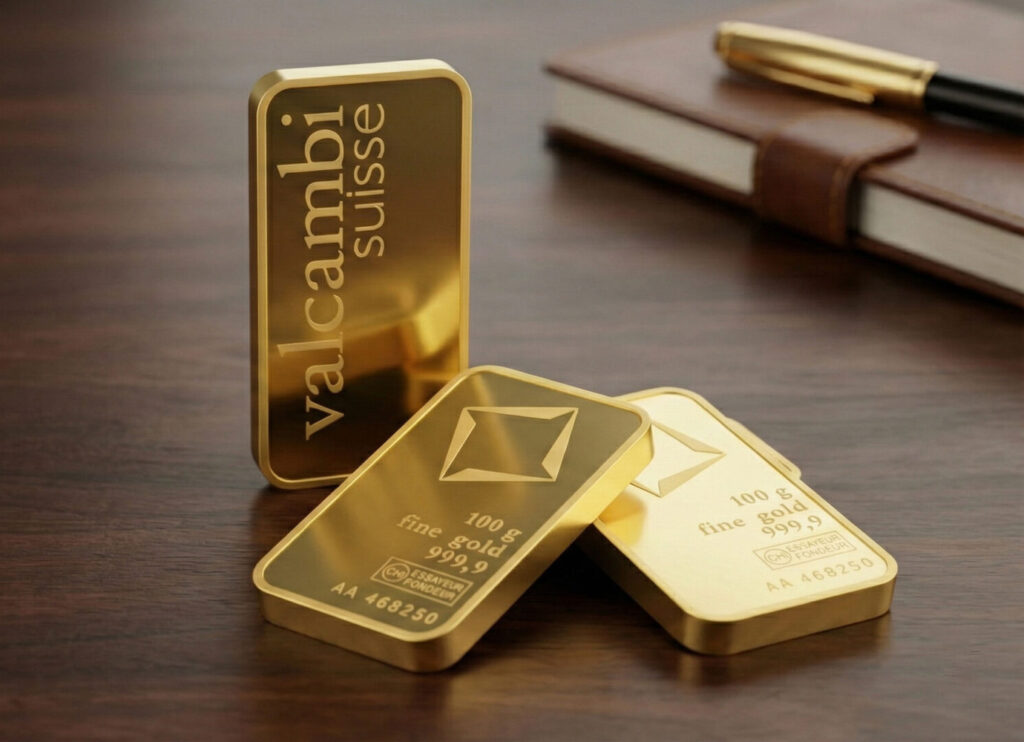

If you have ever looked at a silver bar listed as “1 troy oz” and wondered why the word “troy” is there — and whether it means something different from a regular ounce — you are not alone. It is one of the first questions every new precious metals buyer asks, and the answer matters more than it might seem. Buying gold or silver without understanding troy weight is like buying fabric without understanding the difference between yards and meters: the numbers are real, but you cannot interpret them correctly without the unit. This guide explains troy weight completely — what it is, where it came from, how it differs from the weight system you use every day, and exactly how it applies to every product in the precious metals market.
The Two Weight Systems: Troy and Avoirdupois
Most people in everyday life use the avoirdupois weight system — the standard system for measuring groceries, body weight, shipping packages, and virtually everything else in the United States. In avoirdupois:
- 1 ounce = 28.3495 grams
- 16 ounces = 1 pound = 453.592 grams
Precious metals — gold, silver, platinum, palladium — are measured in the troy weight system. In troy:
- 1 troy ounce = 31.1035 grams
- 12 troy ounces = 1 troy pound = 373.242 grams
The critical numbers: a troy ounce is heavier than a regular ounce by approximately 10%. And a troy pound is lighter than a regular pound — because a troy pound contains only 12 troy ounces, while an avoirdupois pound contains 16 avoirdupois ounces.
This creates a counterintuitive situation that trips up new buyers: when you pick up a 1 oz silver bar and it feels slightly heavier than you expected based on a grocery-store ounce, that is not an error. It is 31.1 grams — a genuine troy ounce — which is 10% more metal than a standard avoirdupois ounce.
Where Troy Weight Comes From: A Brief History
The troy weight system takes its name from Troyes — a medieval French city that was one of the great trading centers of medieval Europe. The Champagne fairs held in Troyes were among the most important commercial markets of the 12th and 13th centuries, attracting merchants from across Europe and the Middle East to trade cloth, spices, metals, and currency. The weight standards used at the Troyes fairs became internationally recognized through sheer commercial volume — merchants from dozens of countries adopted Troyes measurements to facilitate consistent trade.
English merchants adopted the troy system for precious metals in the 15th century, and it was formally incorporated into English law for gold and silver in 1527 under Henry VIII. The system subsequently spread to every major precious metals market globally — and has never been replaced, because the entire infrastructure of international precious metals trading — contracts, assay standards, exchange specifications, and dealer practices — is built on troy weight. When the COMEX specifies that a 1,000 oz silver bar must weigh between 750 and 1,100 troy ounces for COMEX delivery eligibility, those are troy ounces. When the LBMA publishes its daily gold fix in “per troy ounce” terms, the entire global precious metals pricing infrastructure references that number.
Troy weight is not an anachronism — it is the active, functioning standard of the global precious metals industry.
The Practical Conversion Numbers Every Buyer Needs
When you are buying physical gold or silver, three conversions matter consistently:
Troy ounces to grams:
- 1 troy oz = 31.1035 grams
- 5 troy oz = 155.517 grams (the Perth Mint 5 oz cast gold bar)
- 10 troy oz = 311.035 grams (the Valcambi 10 oz gold bar)
- 32.1507 troy oz = 1 kilogram (the Metalor kilo gold bar)
- 100 troy oz = 3,110.35 grams (the Royal Canadian Mint 100 oz silver bar)
Grams to troy ounces:
- 1 gram = 0.03215 troy oz
- 10 grams = 0.3215 troy oz (the Valcambi 10g gold bar)
- 100 grams = 3.215 troy oz (the Valcambi 100x1g Gold CombiBar)
Troy ounces to kilograms:
- 1 kilo = 32.1507 troy ounces
- This is why kilo bars are described as containing “32.15 troy ounces” — the conversion is exact and consistent across every kilo bar product globally
These numbers are fixed physical constants — they do not change with spot price, dealer, or market conditions. Memorizing the key ones eliminates the single most common source of confusion for new precious metals buyers.
Why Gram-Weight Products Exist Alongside Troy Ounce Products
The international precious metals market is predominantly troy-ounce based — driven by North American and UK market conventions. But a parallel gram-weight market exists and serves important purposes. Our entire gram weight gold bar range — from the 0.5g Frontier Mint bar and 0.5g Valcambi bar through 1g bars, 5g bars, 10g bars, 20g bars, 50g bars, and 100g bars — is priced in grams because the metric system provides cleaner entry points for buyers who want specific amounts below a full troy ounce.
A 10g gold bar does not contain exactly 1/3 of a troy ounce — it contains 0.3215 troy ounces. A 5g bar contains 0.1607 troy ounces. The gram-weight system is not simpler than the troy system — it is just a different unit that Swiss refiners like PAMP Suisse and Valcambi Suisse use to produce accessible smaller products. Both systems — troy ounces and grams — coexist in the modern precious metals market because they serve different buyer segments and product ranges effectively.
Troy Weight Across All Four Precious Metals
Troy weight applies uniformly across every investment precious metal. Whether you are buying a 1 oz Platinum Eagle at 31.1035 grams of .9995 fine platinum, a Palladium Maple Leaf at 31.1035 grams of .9995 fine palladium, or 10 oz silver grain shot at 311.035 grams of .9999 fine silver — the troy ounce is the universal unit of measurement. This consistency across all four metals is one reason the troy system has persisted: it provides a single, universally understood weight reference across the entire precious metals complex.
When you compare prices across metals — calculating whether your dollar buys more silver or platinum at current spot rates, for example — the troy ounce is the common unit that makes the comparison valid. Both prices are expressed per troy ounce. The math is direct. Remove troy weight from the equation and cross-metal comparisons become complicated by unit conversion. The system works precisely because it is consistent.
Frequently Asked Questions
Q: Is a troy ounce heavier than a regular ounce?
A: Yes. A troy ounce is 31.1035 grams. A standard avoirdupois ounce is 28.3495 grams. A troy ounce is approximately 10% heavier than a regular ounce. When you pick up a 1 oz silver bar or 1 oz gold coin, it weighs 31.1 grams — not the 28.3 grams you might expect from an everyday ounce.
Q: How many grams are in a troy ounce of gold?
A: Exactly 31.1035 grams. This is a fixed physical constant — it does not change with gold price, dealer, or market conditions. A 1 oz Gold Eagle, 1 oz Maple Leaf, and 1 oz Valcambi gold bar all contain exactly 31.1035 grams of gold.
Q: How many troy ounces are in a kilogram of gold?
A: Exactly 32.1507 troy ounces. This is why kilo gold bars are described as containing “32.15 troy ounces” — it is the precise troy-to-metric conversion for one kilogram.
Q: Why do precious metals use troy ounces instead of regular ounces?
A: The troy system has been the standard for precious metals trading since medieval European commercial fairs — particularly the Champagne fairs at Troyes, France. It was formalized in English law for gold and silver in 1527 and adopted globally through the expansion of British precious metals trading. The entire infrastructure of international precious metals markets — contracts, exchange specifications, assay standards, dealer practices — is built on troy weight. Changing it would require reconstructing the entire global market simultaneously.
Q: If I buy a 100-gram gold bar, how many troy ounces is that?
A: A 100-gram gold bar — like the PAMP Fortuna 100g bar or Valcambi 100g bar — contains 3.215 troy ounces. This is also the total gold content of a Valcambi 100x1g Gold CombiBar — 100 grams, 3.215 troy ounces, divisible into 100 individual gram sections.