Silver has had a remarkable run. Compared to this time last year Silver has risen sharply over the past year, drawing renewed attention from buyers looking to add physical metal to their holdings. With that kind of movement, more buyers are entering the market every week, and more of them are leaving money on the table by overpaying on premiums, ignoring shipping fees, or buying from sellers who lack transparency. The good news is that avoiding those traps is entirely within your control. This guide walks you through exactly how to find silver bars for sale at fair prices, what to look for in a dealer, and how silver rounds for sale fit into your buying plan.
Whether you’re building your first stack or expanding an existing holding, the principles here apply: understand the spot price, compare premiums, and buy from sellers who are upfront about every cost before you check out.
Key Takeaways
Premiums vary dramatically by product type: American Silver Eagles carry premiums of 20-25% over spot, while 1 oz silver bars run 3-8% and 100 oz silver bars drop as low as 2-4% over spot, the lowest cost-per-ounce option available. If you want maximum metal for your money, bars beat coins by a wide margin.
Bar size determines your per-ounce cost: 10 oz bars are the sweet spot for most buyers, premiums drop to 3-5%, handling is straightforward, and virtually every reputable dealer will buy them back without friction. Start here if you’re new.
The silver market is forecast to remain in deficit in 2026: The World Silver Survey 2026 reports a 40.3 million ounce deficit in 2025 and forecasts the deficit to widen to 46.3 million ounces in 2026, which would mark a sixth consecutive annual shortfall.
Your all-in cost is what matters: Your final cost can also include shipping, insurance, and payment method fees. Calculate the total price per ounce across all charges before comparing dealers.
Stick to recognized refiners for easy resale: If you buy established industry hallmark bars, you set yourself up to easily sell your bars for a fair price when the time comes. Conversely, if you buy from suppliers that are not well known, the quality of the bars might be questioned.
Quick-Start Prioritization Framework
| Strategy | Best For | Effort Level | Time to Results |
|---|---|---|---|
| Buy 10 oz bars from recognized refiners | New buyers, most budgets | Low | Immediate |
| Buy 100 oz bars for lowest per-oz cost | Bulk investors, capital deployment | Low | Immediate |
| Silver rounds for sale (private mint) | Flexible budgets, divisibility | Low | Immediate |
| 1 oz bars for maximum flexibility | Small budgets, partial liquidation | Low | Immediate |
| IRA-eligible bars from LBMA refiners | Retirement account holders | Medium | Weeks (setup) |
Start here if you’re:
A first-time buyer: Choose a 10 oz bar from a well-known refiner such as Royal Canadian Mint, Sunshine Minting, or Asahi Refining. Low premium, easy to resell, easy to store.
Buying in bulk: Move to 100 oz bars where premiums compress to 2-4%, meaning more of every dollar goes into actual silver.
Focused on flexibility: Silver rounds for sale from private mints give you the divisibility of 1 oz pieces at premiums closer to bars than coins, a practical middle ground.
Why Silver Bars Offer the Best Value Per Ounce
One of the key things you need to know about silver bars is that they are a terrific vehicle for buying and selling silver. In fact, silver bars represent one of the least expensive methods of investing in silver, gram for gram. That is the core appeal, and it holds true.
How Premiums Work
If you have ever compared the price of a silver bar to the live silver spot price and wondered why there is a gap, you have encountered the silver premium. Understanding premiums is one of the most important skills a silver buyer can develop, because the premium you pay directly affects your break-even point and long-term return.
The silver premium over spot represents the markup charged by dealers above the current silver spot price. This premium covers several legitimate costs in the physical silver supply chain, from mining to your doorstep. Think of it as the cost of converting raw market silver into a finished, stamped, verified product that you can hold, store, and eventually resell.
Normal premiums are 8-15% for popular coins and 4-10% for bars. Premiums above 20% signal either extreme market stress or overpriced dealers to avoid. Use those numbers as your baseline benchmark. If a dealer is charging more than 20% on standard bars in a calm market, walk away.
Bar Size vs. Premium: The Practical Math
Generally speaking, the premium for silver goes down as the size of the bar goes up. Buying a singular 400 oz bar can be more affordable for a bulk purchase than buying 400 individual 1 troy oz silver bars because of the premium per ounce of each bar.
Here is how the premium curve looks across common sizes, according to goldsilver.com’s 2026 silver buying guide:
1 oz silver bars: 3-8% over spot
10 oz silver bars: 3-6% over spot (bulk discounts apply)
100 oz silver bars: 2-4% over spot, lowest cost-per-ounce option
A 100-ounce bar costs less per ounce than twenty individual 1-ounce coins because the fabrication, packaging, and handling costs are spread across more metal. If your primary goal is accumulating ounces, larger formats are your friend. The practical action: before you buy, divide your total all-in cost (including shipping and payment fees) by the number of ounces you’re purchasing, then compare that number across at least three dealers.
Pro Tip: Calculate total price paid (including shipping and fees), divide by the number of ounces you’re buying, and compare the all-in cost per ounce across sellers. This single habit prevents most overpayment mistakes.
Silver Bars vs. Silver Rounds for Sale: Choosing the Right Format
Many buyers discover silver rounds for sale while shopping for bars and aren’t sure which to prioritize. Both are private mint products with no government backing, but they behave differently in a few key areas.
What Makes Silver Rounds Distinct
The most significant difference between coins, bars, and rounds comes down to premiums over spot, the extra cost above silver’s market price that reflects minting, demand, and dealer margins. Coins typically carry premiums of 20-30% above spot, rounds usually land in the midrange at 10-15% above spot, and bars offer the lowest premiums, as low as 5-10%, particularly for larger weights.
Silver rounds excel in their divisibility. If you need to sell 5 ounces, simply select five rounds from your collection. This makes rounds great for investors who might need partial liquidation or prefer dollar-cost averaging for their sales.
Silver bars, particularly large ones, present an all-or-nothing proposition; you obviously cannot sell half of a 100-ounce bar. However, well-known brands do maintain strong market demand, so you’ll often be able to make a quick sale when needed.
Which Format Suits Your Goals
Pros (Silver Bars):
Lowest premiums of any silver format
Maximum metal per dollar spent
Stackable and storage-efficient
Wide selection of sizes from 1 oz to 1,000 oz
IRA-eligible when meeting purity and refiner standards
Cons (Silver Bars):
Larger bars require all-or-nothing resale decisions
Less divisible than rounds or coins
May require assay verification for private-sale transactions
Pros (Silver Rounds):
Lower premiums than coins
Highly divisible, easy to sell in small increments
Available in creative designs from private mints
Good for dollar-cost averaging
Cons (Silver Rounds):
Higher premiums than equivalent-weight bars
Less institutional recognition than government coins
Not all rounds qualify for IRA inclusion
In my experience, most buyers are best served by a split approach: hold the majority of their position in 10 oz or larger bars for cost efficiency, then supplement with silver rounds for sale when they want the flexibility to move smaller amounts quickly.

How to Evaluate a Silver Bar Dealer Without Getting Burned
When trying to decide where to buy silver bars, you need to pay attention to the premium charged, premiums on silver bars will be lower the larger the bar. Premiums cover the costs involved in getting that bar to the point where it can be sold to you. Take the time to compare premiums across providers and do not be afraid to ask why premiums are what they are.
Red Flags to Watch
Some merchants have been known to charge undisclosed fees to those buying silver bars. Check what these might be prior to making any commitment. There should not be any charges past the bar itself, the premium, and (if relevant) any delivery costs.
The most significant red flag is a price that seems “too good to be true.” Silver has a global spot price, and legitimate dealers sell for a modest premium above that. A dealer advertising bars well below comparable market premiums is almost certainly cutting corners somewhere, whether on authenticity verification, insurance, or customer service.
What Trustworthy Dealers Provide
Look for dealers who display live spot pricing, show premiums transparently, carry clear return policies, offer insured shipping, and require a signature on delivery. Fresh Desert Gold Co. is a family-owned dealer that offers insured shipping with signature-required delivery and a secure checkout experience, the kind of transparent, accountable service that matters when you’re sending money for physical metal.
Pro Tip: Always check whether a dealer is a member of the Industry Council for Tangible Assets (ICTA) or an accredited member of a recognized trade body. These affiliations signal accountability that anonymous online sellers lack.
Authenticating Your Purchase
When inspecting silver bars, the first details you should examine are their markings. Practically every piece of silver or gold bears the mintmark of its producer, so any items missing this essential marking should give you cause for suspicion. Other common markings worth noting are weight, purity, serial numbers, and mintage year. No markings at all are a clear indication that the piece is fake.
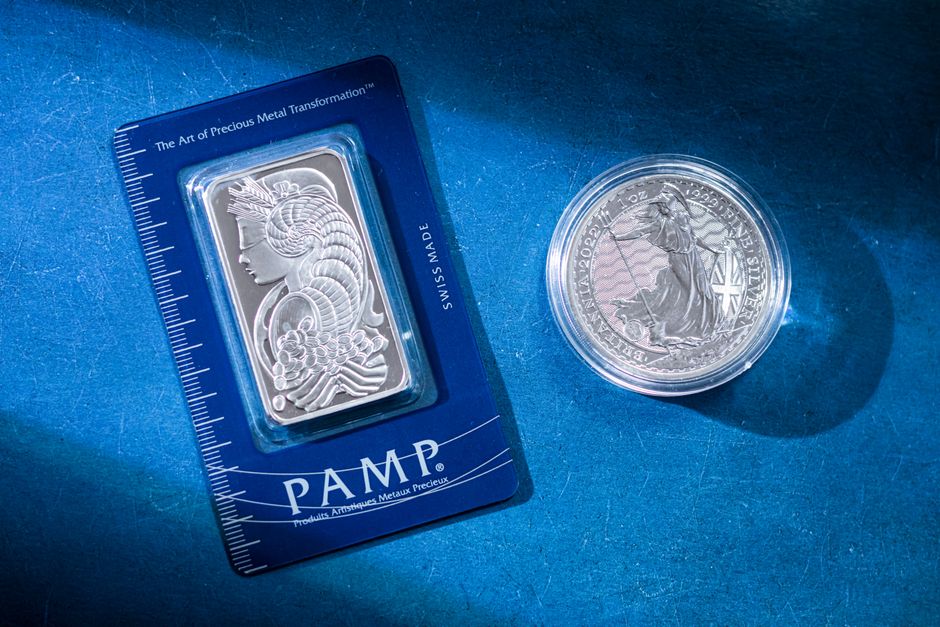
Tamper-proof packaging: many silver bars are sold in sealed “assay” cards that guarantee weight and purity and show evidence of tampering if opened. Buying bars in intact assay packaging protects you at point of purchase and protects the next buyer if you ever resell, keeping original packaging in good condition supports both liquidity and price.
IRA-Eligible Silver Bars: What the Rules Actually Require
Many buyers shopping for silver bars for sale eventually ask whether their purchase can go inside a retirement account. The answer is yes, if you buy the right products.
The Two-Part Eligibility Test
Silver qualifies for an IRA when it passes a two-part test. Purity alone is not enough, which is the mistake that trips up most buyers. Test 1, fineness: the silver must be at least .999 fine (99.9% pure). This is stricter than gold’s .995 standard because lower-grade silver alloys are common in the coin market. Test 2, approved manufacturer: the silver must be produced by a national government mint or by a refiner, assayer, or manufacturer accredited by a recognized body such as NYMEX, COMEX, the LBMA, or ISO 9000.
IRA-eligible silver bars must meet .999 fineness and be produced by an LBMA-accredited or NYMEX/COMEX-approved refiner. The LBMA (London Bullion Market Association) maintains a Good Delivery List of accredited refiners whose silver bars meet international standards for weight, purity, and provenance.
Best Bar Sizes for IRA Accounts
IRA-eligible silver bars come in sizes from 1 ounce to 1,000 ounces. For individual retirement investors, 10-ounce and 100-ounce bars from accredited refiners are the most common choices.
Pro Tip: IRA-minded buyers should prioritize .999 or .9999 fineness from recognized refiners and keep assay packaging intact to support eligibility and verification. A damaged assay card or opened packaging can create problems when your custodian accepts or audits the holding.
Storing Silver Bars Safely After You Buy
Buying smart is only half the job. Once you have bought silver, the next critical decision is where and how to store it so it remains safe, undamaged, and easy to sell when needed. Poor storage can expose you to theft, fire, flood, or corrosion and may leave you under-insured if your home policy does not fully cover bullion stored on-site.
Three Storage Options Compared
Home safe: Home storage requires a heavy safe (300-500+ lbs), climate control, and discretion. It’s best for emergency liquidity and smaller holdings. The upside is instant access. The downside is that home insurance policies rarely cover bullion at full replacement value.
Bank safe deposit box: Bank safe deposit boxes are the most familiar offsite storage option and historically the default fallback for anything too valuable to keep at home. However, contents are not FDIC insured – this is the single most important thing to understand.
Private vault: Third-party storage facilities specialize in the storage of valuable items like silver. They typically offer maximum security options like vault storage under constant surveillance and highly controlled access. The facilities typically offer insurance options, which add an extra layer of protection for your silver investments.
Store silver bars in airtight anti-tarnish bags or containers to prevent oxidation, regardless of where you store them. Silver reacts with sulfur compounds in the air and can tarnish, though tarnish on bullion bars does not reduce melt value.

The Market Backdrop: Why Buyers Are Paying Attention Right Now
Understanding why silver is drawing attention helps you make better buying decisions.
Over the past month, silver’s price has fallen 5.32%, but it is still 48.20% higher than a year ago, according to Trading Economics data from September 2026. That kind of correction after a sharp rally is where informed buyers often see opportunity.
It is the sixth consecutive year that global silver demand has exceeded total supply, according to the World Silver Survey 2026 (Silver Institute / Metals Focus, April 15, 2026). That deficit is widening even as total demand is expected to fall 2%. The reason: supply is falling faster. Total global silver supply is also forecast to decline 2% in 2026.
This does not mean prices will rise in a straight line. J.P. Morgan Global Research forecasts the price of silver will reach $63 per ounce in Q4 of 2026, below current spot levels. Price forecasts are not guarantees, and this article is not financial advice. What the deficit data does tell you is that physical silver is being absorbed faster than it is being produced, which has implications for long-term buyers accumulating ounces at today’s premiums.
Pro Tip: Track the live spot price at a reputable source like USA Gold’s silver price history tool before placing any order. Premiums are calculated off spot, so knowing the exact spot price at the moment of purchase tells you exactly what you are actually paying above market.
Frequently Asked Questions
What is the difference between a silver bar and a silver round?
Silver bars are one of the most straightforward approaches to silver investing, they’re rectangular blocks of pure silver ranging from 1 ounce to massive 1,000-ounce industrial bars. Silver rounds are coin-shaped but produced by private mints rather than governments, meaning they carry no legal tender status. Both are .999 fine silver, but bars typically carry lower premiums per ounce, while rounds offer the divisibility of 1 oz pieces with premiums slightly above bar levels.
How do I know if a silver bar is genuine?
Check the edges of coins and verify the weight: a real 1 oz silver piece weighs 31.103 grams, and deviations are a red flag. For bars, inspect the hallmarks, every legitimate bar should show weight, purity, refiner name, and a serial number. You should always buy from a reputable dealer and a certified refiner. If you stick with legitimate bullion dealers, then you won’t have an issue with illegitimate silver. Buying from a trusted dealer with a physical return address is your single strongest protection.
What size silver bar should a first-time buyer purchase?
The 10 oz bar is a common sweet spot for premiums, storage, and resale. It offers meaningfully lower premiums than 1 oz bars, remains easy to handle and store, and is widely recognized by dealers for resale without friction. If your budget is smaller, 1 oz bars offer maximum flexibility for partial sales. If you’re deploying substantial capital, 100 oz bars deliver the lowest premiums available in retail markets.
Can I put silver bars in an IRA?
Yes, with conditions. The Internal Revenue Code (IRC Section 408(m)(3)(B)) establishes the standards for silver held in a retirement account: all silver in an IRA must have a minimum fineness of 99.9 percent (0.999). The bar must also come from an LBMA-accredited or COMEX/NYMEX-approved refiner. Bars from unknown private mints do not qualify. Work with a self-directed IRA custodian who specializes in precious metals to ensure proper setup and storage.
How should I compare silver bar dealers to avoid overpaying?
The most important number is your total cost per ounce after premium, shipping, payment method fees, and taxes. Request or calculate the all-in price per ounce from at least three dealers before committing. Watch for hidden charges, payment method surcharges (credit card fees can add 3-4%), and shipping costs that inflate the effective premium. Dealers who display transparent, live-updated premiums over spot make this comparison far easier.
Sources
Silver Bullion Buying Guide 2026: Coins, Bars, and Rounds Compared, goldsilver.com. Premium comparison data for coins, bars, and rounds. https://goldsilver.com/industry-news/article/silver-coins-bars-and-rounds-compared/
World Silver Survey 2026, Silver Institute / Metals Focus, silverinstitute.org. Sixth consecutive annual deficit forecast at 46.3 Moz. https://silverinstitute.org/global-silver-investment-to-remain-strong-in-2026-against-the-backdrop-of-a-sixth-consecutive-annual-market-deficit/
Silver Price History: Interactive Charts and Data, USA Gold. Live and historical silver spot price data. https://www.usagold.com/daily-silver-price-history/
Silver Bar Buyer’s Guide, Gainesville Coins. How and where to buy silver bars. https://www.gainesvillecoins.com/blog/silver-bar-buyers-guide
Silver Bars (2026 Reviews): Buyer’s Guide, Prices, Sizes, and Where to Buy, Gold IRA Guide. All-in cost calculation methodology. https://goldiraguide.org/silver-bars-2026-reviews-buyers-guide-prices-sizes-where-to-buy/
Silver Premiums Explained: How to Minimize Cost Over Spot, MintBuilder. Premium mechanics and size comparison. https://mintbuilder.com/blog/silver-premiums
Silver Premium Over Spot: Your Complete Guide to Smart Buying, Silver of Truth. Normal premium ranges and warning signals. https://www.silveroftruth.com/blog/silver-premium-over-spot
IRA-Eligible Silver: Complete Product List for 2026, MintBuilder. IRC Section 408(m) purity and manufacturer requirements. https://mintbuilder.com/blog/ira-eligible-silver
IRA-Approved Silver: Coins and Bars That Qualify, Cedar Gold Group. LBMA and COMEX accreditation requirements. https://cedargoldgroup.com/ira-approved-silver/
Silver Price Today, Trading Economics. Current spot price and year-over-year performance data. https://tradingeconomics.com/commodity/silver
J.P. Morgan Silver Price Forecast for 2026 and 2027, jpmorgan.com. Q4 2026 price forecast of $63/oz. https://www.jpmorgan.com/insights/global-research/commodities/silver-prices
Silver Rounds vs. Silver Bars: Which Is the Better Investment?, Samuelson’s Diamonds. Divisibility and liquidity comparison. https://www.samuelsonsdiamonds.com/insights/silver-rounds-vs-silver-bars-which-is-the-better-investment/
How to Spot Fake Silver Bars: Complete Authentication Guide, 1ozSilverBars.com. Counterfeit detection methods. https://1ozsilverbars.com/guides/fake-silver-bars
How to Buy Silver Bars: The Investor’s Guide, goldsilver.com. Bar sizes, premiums, and storage overview. https://goldsilver.com/industry-news/article/how-to-buy-silver-bars-the-investors-guide/
Safe Silver Storage: Top 3 Ultimate Security, Summit Metals. Home vs. vault storage options and weight considerations. https://summitmetals.com/blogs/dollar-cost-averaging-dca/safe-silver-storage