
How Precious Metals Premiums Work: Why You Never Pay Spot Price
Every first-time buyer of physical gold or silver encounters the same moment of confusion: they check the gold spot price, then look at a product listing, and discover the actual purchase price is noticeably higher. Sometimes significantly higher. The difference is the premium — and understanding exactly what it is, where it comes from, how it varies across products, and how it affects your investment returns over time is one of the most practically important things a precious metals buyer can learn. This guide covers it completely, from first principles to advanced premium strategy.
What the Premium Actually Is: A Complete Definition
The premium is the amount you pay above the current spot price for a finished, packaged, delivered precious metals product. It is expressed either in dollar terms per ounce or as a percentage above spot. If silver spot is $32.00 and a 1 oz Silver American Eagle costs $38.00, the premium is $6.00 per ounce — or 18.75% above spot.
The premium is not profit that disappears into thin air. Every dollar of premium covers real, identifiable costs in the supply chain between raw metal in a refinery and a finished product in your hands:
Refining and minting costs — transforming raw precious metal into a finished bar or coin with consistent dimensions, weight, and surface quality requires industrial equipment, skilled labor, quality control, and energy. These are real manufacturing costs that vary by product complexity.
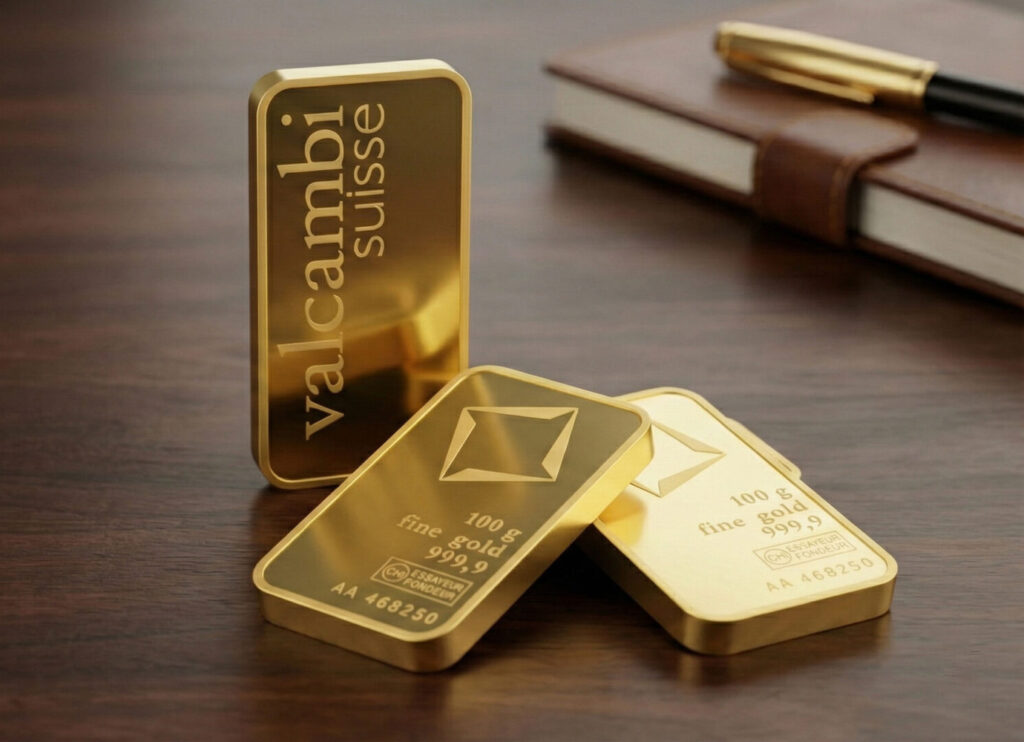
Assay certification — the sealed assay card on a Valcambi gram-weight bar or PAMP Suisse bar is not free. Assay testing, certification, card production, and sealed packaging each add cost per unit.
Sovereign mint overhead — government mints producing Gold Eagles, Silver Maple Leafs, and Platinum Philharmonics operate to legal tender production standards, with die production, quality inspection, and government certification costs built into every coin.
Distribution and dealer margin — every link in the chain between the refinery and your door — wholesale distributor, retail dealer, shipping, insurance — operates at a margin. Fresh Desert Gold Co.’s premiums cover our operational costs and a margin that allows us to remain in business serving you.
Market demand dynamics — when specific products are in high demand relative to supply — a surge in Silver Eagle demand following a market event, for example — premiums rise above their structural cost floor because buyers are competing for limited available inventory.
Why Premiums Vary So Dramatically Across Products
Not all gold is equally expensive to produce, package, and distribute — and the premium structure reflects this precisely.
Bar size is the most powerful premium variable. Fixed manufacturing and packaging costs are spread across the gold content of the bar. On a 0.5g Valcambi gold bar — containing approximately $45 of gold at current prices — those fixed costs represent a large percentage of the bar’s value, producing a very high premium percentage. On a Metalor kilo bar containing over $100,000 of gold, those same fixed costs are spread across 32.15 troy ounces — producing the lowest per-ounce premium in the retail gold market. This is why experienced investors who are purely accumulating gold buy at the largest format their budget allows. The 10 oz gold bars — Valcambi, PAMP Veriscan, Perth Mint — represent the best premium efficiency below the kilo level.
Sovereign mint coins vs private refinery bars. A 1 oz Gold Maple Leaf and a 1 oz Valcambi gold bar contain identical gold content at identical purity. The Maple Leaf costs more — because the Royal Canadian Mint’s legal tender production standards, die production, and government certification all cost money. That premium buys you legal tender status, sovereign backing, wider public recognition, and — for IRA purposes — the clearest statutory eligibility pathway. Whether that additional cost is worthwhile depends entirely on your investment purpose.
Product complexity. The Valcambi 100x1g Gold CombiBar carries a higher premium than a solid 100g gold bar because the patented pre-scoring process, individual section verification, and divisibility engineering add real manufacturing cost. The 2022-W Proof Gold Buffalo carries a substantial premium above the bullion Gold Buffalo because proof minting — polished dies, multiple strikes, hand-selected planchets — costs dramatically more than standard bullion production.
Condition and scarcity on vintage products. The Engelhard 100 oz silver bar and Engelhard Prospector round carry collector premiums above their silver content because production ceased in 1989 and supply is permanently finite. This collector premium has nothing to do with manufacturing cost — it is pure market scarcity premium.
How Premiums Affect Your Investment Returns
This is the dimension most buyers overlook when comparing products purely on metal content. The premium you pay on entry directly affects your break-even point — the spot price at which your investment returns to zero gain.
If silver spot is $32.00 and you buy a Silver American Eagle at $38.00, silver spot must rise to approximately $35–$36 before you break even on a dealer buyback — accounting for the spread on the sell side. If you buy a 10 oz silver bar at $33.50 per ounce, your break-even is significantly lower. The Eagle’s higher premium requires a larger silver price appreciation to achieve the same return.
This does not mean sovereign mint coins are bad investments. It means the premium you pay defines your return profile — and you should pay it consciously, for reasons you can articulate. Pay sovereign mint premiums for legal tender status, IRA eligibility certainty, and maximum resale recognition. Pay lower bar premiums when your goal is maximum silver or gold content per dollar. Pay collector premiums on vintage Engelhard products or Proof Gold Buffalos when you specifically want the numismatic dimension alongside metal content.
The Lowest-Premium Products in Each Metal Category
For buyers whose primary goal is maximizing metal content per dollar — the most direct expression of precious metals investment — these are the lowest-premium formats in our inventory across each metal:
Gold: 10 oz gold bars and kilo gold bars carry the lowest per-ounce premiums. Among 1 oz products, private refinery bars — Valcambi, Argor-Heraeus — carry lower premiums than sovereign coins.
Silver: 100 oz silver bars — the Frontier Mint frosted bar, Royal Mint Britannia bar, Royal Canadian Mint bar — and the 1,000 oz COMEX bar for institutional buyers. Generic 1 oz silver rounds and 1 oz silver bars at the smaller end.
Platinum: Valcambi platinum bars consistently carry the lowest per-ounce premium among our platinum products.
Palladium: Valcambi palladium bars and Credit Suisse palladium bars carry lower premiums than the Palladium Maple Leaf coin.
Frequently Asked Questions
Q: Why is gold more expensive than the spot price I see online?
A: The spot price is a wholesale professional market benchmark — it does not include the real costs of refining, minting, assay certification, packaging, distribution, insurance, or dealer operations. Every finished bullion product carries a premium above spot that covers these costs. No retail bullion dealer anywhere sells at spot price.
Q: Which gold product has the lowest premium?
A: Among our products, kilo gold bars — particularly the Metalor kilo bar — carry the lowest per-troy-ounce premium. 10 oz gold bars are the best sub-kilo option. Among 1 oz products, private refinery bars consistently carry lower premiums than sovereign mint coins at the same gold content.
Q: Do premiums go up and down with the market?
A: Yes. The structural floor of premiums is set by manufacturing and distribution costs — these are relatively stable. But the market component of premiums fluctuates with supply and demand. When investor demand surges — as happened with Silver Eagles during market stress periods — premiums above the structural floor rise significantly as buyers compete for limited inventory. When demand normalizes, premiums compress toward their cost floor.
Q: Does the premium affect what I get when I sell?
A: The premium you pay on entry defines your break-even point — how much spot price must rise before you are in profit on a dealer buyback. High-premium products require more spot price appreciation to break even. However, recognized products that you paid a premium for — sovereign mint coins, named-brand refinery bars — also tend to receive tighter buyback spreads, which partially offsets the entry premium.
Q: How do I minimize the premium I pay on silver?
A: Buy larger bar formats — 10 oz silver bars and 100 oz bars carry meaningfully lower per-ounce premiums than 1 oz pieces. Choose generic silver rounds or any-mint silver bars over sovereign mint coins when IRA eligibility and brand recognition are not your priority. Consider silver grain shot if you want the absolute lowest premium on .9999 fine silver in a working-metal format.