Guide
The Complete Guide to Gold and Silver Coin Grading
Walk into the numismatic side of any serious precious metals conversation and you will encounter a vocabulary that
Discover our collection of gold coins in a variety of weights, designs, and trusted mint options. Whether you’re investing, building your collection, or looking for a timeless gift, our gold coins offer a convenient way to own physical gold.
Discover our collection of gold coins in a variety of weights, designs, and trusted mint options. Whether you’re investing, building your collection, or looking for a timeless gift, our gold coins offer a convenient way to own physical gold.
Makes it simple to buy gold and precious metals with confidence. We offer a carefully selected range of gold bars, gold coins, platinum, silver, and other precious metals for investors, collectors, and anyone looking to own tangible assets.
Makes it simple to buy gold and precious metals with confidence. We offer a carefully selected range of gold bars, gold coins, platinum, silver, and other precious metals for investors, collectors, and anyone looking to own tangible assets.
Discover our collection of gold coins in a variety of weights, designs, and trusted mint options. Whether you’re investing, building your collection, or looking for a timeless gift, our gold coins offer a convenient way to own physical gold.
Discover our collection of gold coins in a variety of weights, designs, and trusted mint options. Whether you’re investing, building your collection, or looking for a timeless gift, our gold coins offer a convenient way to own physical gold.
Makes it simple to buy gold and precious metals with confidence. We offer a carefully selected range of gold bars, gold coins, platinum, silver, and other precious metals for investors, collectors, and anyone looking to own tangible assets.
Makes it simple to buy gold and precious metals with confidence. We offer a carefully selected range of gold bars, gold coins, platinum, silver, and other precious metals for investors, collectors, and anyone looking to own tangible assets.
Discover our collection of gold coins in a variety of weights, designs, and trusted mint options. Whether you’re investing, building your collection, or looking for a timeless gift, our gold coins offer a convenient way to own physical gold.
Discover our collection of gold coins in a variety of weights, designs, and trusted mint options. Whether you’re investing, building your collection, or looking for a timeless gift, our gold coins offer a convenient way to own physical gold.
Makes it simple to buy gold and precious metals with confidence. We offer a carefully selected range of gold bars, gold coins, platinum, silver, and other precious metals for investors, collectors, and anyone looking to own tangible assets.
Makes it simple to buy gold and precious metals with confidence. We offer a carefully selected range of gold bars, gold coins, platinum, silver, and other precious metals for investors, collectors, and anyone looking to own tangible assets.
Discover our collection of gold coins in a variety of weights, designs, and trusted mint options. Whether you’re investing, building your collection, or looking for a timeless gift, our gold coins offer a convenient way to own physical gold.
Discover our collection of gold coins in a variety of weights, designs, and trusted mint options. Whether you’re investing, building your collection, or looking for a timeless gift, our gold coins offer a convenient way to own physical gold.
Makes it simple to buy gold and precious metals with confidence. We offer a carefully selected range of gold bars, gold coins, platinum, silver, and other precious metals for investors, collectors, and anyone looking to own tangible assets.
Makes it simple to buy gold and precious metals with confidence. We offer a carefully selected range of gold bars, gold coins, platinum, silver, and other precious metals for investors, collectors, and anyone looking to own tangible assets.
Discover our collection of gold coins in a variety of weights, designs, and trusted mint options. Whether you’re investing, building your collection, or looking for a timeless gift, our gold coins offer a convenient way to own physical gold.
Discover our collection of gold coins in a variety of weights, designs, and trusted mint options. Whether you’re investing, building your collection, or looking for a timeless gift, our gold coins offer a convenient way to own physical gold.
Makes it simple to buy gold and precious metals with confidence. We offer a carefully selected range of gold bars, gold coins, platinum, silver, and other precious metals for investors, collectors, and anyone looking to own tangible assets.
Makes it simple to buy gold and precious metals with confidence. We offer a carefully selected range of gold bars, gold coins, platinum, silver, and other precious metals for investors, collectors, and anyone looking to own tangible assets.
Discover our collection of gold coins in a variety of weights, designs, and trusted mint options. Whether you’re investing, building your collection, or looking for a timeless gift, our gold coins offer a convenient way to own physical gold.
Discover our collection of gold coins in a variety of weights, designs, and trusted mint options. Whether you’re investing, building your collection, or looking for a timeless gift, our gold coins offer a convenient way to own physical gold.
Makes it simple to buy gold and precious metals with confidence. We offer a carefully selected range of gold bars, gold coins, platinum, silver, and other precious metals for investors, collectors, and anyone looking to own tangible assets.
Makes it simple to buy gold and precious metals with confidence. We offer a carefully selected range of gold bars, gold coins, platinum, silver, and other precious metals for investors, collectors, and anyone looking to own tangible assets.
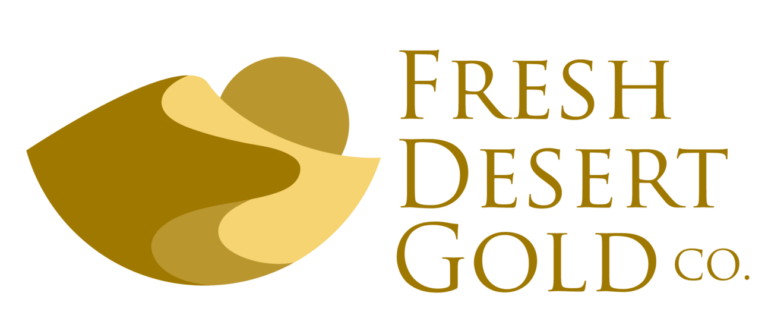
If you have encountered the term “Goldback” in a precious metals community, on a financial independence forum, or at a coin show and wondered what it actually is — this guide covers everything. The Arizona Goldback is one of the most genuinely unusual products in the precious metals market: a voluntarily circulating currency note made with real 24-karat gold, legal in Arizona, accepted by a growing network of local businesses, and collecting a dedicated following among precious metals enthusiasts, liberty-minded investors, and people who specifically want gold in a format they can actually spend. Fresh Desert Gold Co. is an official Goldback® Authorized Distributor — one of a select number of licensed dealers specifically authorized to sell genuine Arizona Goldbacks.
A Goldback is a voluntarily circulating gold note produced by Goldback Inc., a private company based in Draper, Utah. Each note contains a specific, documented quantity of .9999 fine 24-karat gold — deposited as an ultra-thin layer between protective polymer sheets using a vacuum deposition process. This is not gold paint, gold plating, or gold-colored ink. It is physical gold — real, measurable, verifiable — applied using the same vacuum deposition technology used in aerospace and semiconductor manufacturing.
The gold layer is extraordinarily thin but genuinely present and quantifiable. Each denomination contains a specific fraction of a troy ounce of gold, scaling linearly from the smallest to the largest:
| Denomination | Gold Content |
|---|---|
| 0.5 Goldback | 1/2000th troy oz |
| 1 Goldback | 1/1000th troy oz |
| 2 Goldback | 2/1000th troy oz |
| 5 Goldback | 1/200th troy oz |
| 10 Goldback | 1/100th troy oz |
| 25 Goldback | 1/40th troy oz |
| 50 Goldback | 1/20th troy oz |
| 100 Goldback | 1/10th troy oz |
A 100 Goldback contains the same gold as a 1/10 oz Gold Eagle — 3.1103 grams of .9999 fine gold. The denominations scale exactly: a 100 Goldback contains 100 times the gold of a 1 Goldback, 10 times the gold of a 10 Goldback, and twice the gold of a 50 Goldback. The mathematics are designed to be transparent and intuitive.
The skepticism new buyers bring to Goldbacks is understandable. A paper-format note claiming to contain gold sounds like every fiat currency ever printed — which claimed gold backing until it did not. Goldbacks are different in a verifiable, physical sense.
Vacuum deposition is a manufacturing process in which a solid material — in this case, .9999 fine gold — is heated in a vacuum chamber until it vaporizes. The gold vapor then deposits as a thin, uniform film onto a substrate surface. In Goldback production, this substrate is the polymer note itself. The gold layer that results is genuinely present — weighable, assayable, and verifiable through standard precious metals testing.
The gold content of each Goldback denomination is not a claim. It is a documented, audited, physically verifiable quantity that any metals testing facility can confirm. Goldback Inc. publishes regular transparency reports on the gold content of produced notes, and the gold can be independently verified by weight (though the notes themselves should not be damaged for testing if they are in collectible condition). This is categorically different from paper currency that “represents” gold — the gold is in the note.
Arizona Goldbacks operate under Arizona state law as a voluntary medium of exchange. Arizona’s legal framework for sound money — established through state legislation — recognizes gold and silver as legal tender alongside Federal Reserve notes for voluntary transactions between willing parties. Goldbacks are not US legal tender in the federal sense. They carry no government guarantee of acceptance. They function entirely on voluntary agreement between buyers and sellers who choose to use them.
In practice, a growing network of Arizona businesses — primarily small businesses, farmers markets, service providers, and retailers in communities with active sound money followings — voluntarily accept Goldbacks in exchange for goods and services. The exchange rate is typically based on the current gold spot price, with the business setting its own Goldback-to-dollar conversion for the day. For buyers who specifically want to use gold in daily commerce — not just hold it in a safe — Goldbacks provide a practical format for this that Gold Eagles and gold bars cannot.
The artistic dimension of Arizona Goldbacks is not incidental — it is a core part of the product’s identity. Each denomination features original engravings commissioned from professional artists, depicting virtues associated with Arizona’s history and character:
The 1 Goldback depicts Industry — a woman at work, representing the productive foundation of Arizona’s economy. The 5 depicts Wisdom. The 10 depicts Prudence. The 25 depicts Justice. The 50 depicts Courage. The 100 depicts Liberty. These are not clip-art designs or generic numismatic compositions. They are original artworks created specifically for the Goldback series by professional engravers, rendered at a level of detail that rewards magnification — intricate background patterns, fine linework, and the warmth of gold visible through the polymer overlay giving each note a visual quality unlike any other precious metals product.
For collectors who appreciate engraving as an art form — the tradition of fine note engraving that defined the great era of paper currency design — the Goldback series is genuinely compelling as a visual object independently of its gold content. A complete Arizona denomination set from 0.5 through 100 is one of the most visually distinctive precious metals collections available from any producer.
The most important framing for potential Goldback buyers: Goldbacks are not a replacement for gold bars or gold coins as an investment or wealth preservation vehicle. They serve a completely different purpose.
Gold bars and gold coins are the right format for accumulating gold content efficiently with maximum resale liquidity and the lowest possible premium per ounce. A 1 oz Gold Maple Leaf or Valcambi kilo bar holds far more gold per dollar than any Goldback denomination — the vacuum deposition process and artisan note production carry costs that push Goldback premiums above what standard bar or coin formats charge per ounce.
Goldbacks serve purposes that bars and coins cannot: daily transactional use, artistic collection, introducing new people to gold ownership through a format they can immediately understand as money, and participation in a specific community of sound money users. The buyer who holds Gold Eagles for investment and a complete Arizona Goldback denomination set for daily utility and collection is using each format for what it does best.
Goldback Inc. maintains a network of authorized distributors — dealers specifically licensed to carry and sell genuine Arizona Goldbacks sourced directly through Goldback Inc.’s official supply chain. Fresh Desert Gold Co. is one of these authorized distributors. Goldbacks purchased from unauthorized secondary market sources may be genuine but cannot be verified as part of Goldback Inc.’s documented production chain. Buying from an authorized distributor eliminates this uncertainty: every Goldback we sell is sourced directly, genuinely authentic, and current production.
Q: Are Goldbacks real gold?
A: Yes. Each Goldback contains a documented, physically verifiable quantity of .9999 fine 24-karat gold deposited through a vacuum deposition process. The gold is genuinely present in the note — not printed, plated, or represented. It is measurable and can be independently verified through standard precious metals testing.
Q: Are Goldbacks a good investment?
A: Goldbacks contain real gold that appreciates as gold prices rise — so the gold content holds value. However, Goldbacks carry higher premiums per troy ounce than standard gold bars and coins due to the complex note production process. They are best understood as a multi-purpose product: part gold holding, part transactional currency, part collectible. For pure gold investment efficiency, gold bars and gold coins deliver more gold per dollar. For transactional use and collector appeal alongside gold content: Goldbacks are unique.
Q: What denomination Goldback should I buy first?
A: The 1 Goldback and 5 Goldback are the most popular entry denominations for new buyers — low enough in cost to experiment without significant commitment, distinctive enough in artwork to make the product’s character immediately apparent. The 100 Goldback is the most significant single denomination — containing 1/10 oz of gold — and is the natural choice for buyers who want a substantial Goldback holding in a single piece.
Q: Can I spend Goldbacks in Arizona?
A: Yes — at businesses that voluntarily accept them. A growing network of Arizona businesses accepts Goldbacks at exchange rates based on current gold spot price. The network is not universal — Goldbacks are a voluntary system, not legal tender requiring acceptance. Goldback Inc. maintains a directory of accepting businesses.
Q: Where can I see the complete Arizona Goldback denomination set?
A: Browse our complete Arizona Goldback collection for all available denominations from 0.5 through 100 Goldback. As an authorized distributor, every Goldback we carry is sourced directly through Goldback Inc.’s official supply chain.

Investment-grade gold, priced with the live market and fully insured.
Prices, new stock and new guides. No spam.
Walk into the numismatic side of any serious precious metals conversation and you will encounter a vocabulary that
Inflation is not an abstract economic concept — it is the measured, documented erosion of what your money
Among the analytical tools that serious precious metals investors use, one stands out for its simplicity and its
Email us and a real person will help you choose the right gold for you.