
Guide
The Complete Guide to Gold and Silver Coin Grading
Walk into the numismatic side of any serious precious metals conversation and you will encounter a vocabulary that
Discover our collection of gold coins in a variety of weights, designs, and trusted mint options. Whether you’re investing, building your collection, or looking for a timeless gift, our gold coins offer a convenient way to own physical gold.
Discover our collection of gold coins in a variety of weights, designs, and trusted mint options. Whether you’re investing, building your collection, or looking for a timeless gift, our gold coins offer a convenient way to own physical gold.
Makes it simple to buy gold and precious metals with confidence. We offer a carefully selected range of gold bars, gold coins, platinum, silver, and other precious metals for investors, collectors, and anyone looking to own tangible assets.
Makes it simple to buy gold and precious metals with confidence. We offer a carefully selected range of gold bars, gold coins, platinum, silver, and other precious metals for investors, collectors, and anyone looking to own tangible assets.
Discover our collection of gold coins in a variety of weights, designs, and trusted mint options. Whether you’re investing, building your collection, or looking for a timeless gift, our gold coins offer a convenient way to own physical gold.
Discover our collection of gold coins in a variety of weights, designs, and trusted mint options. Whether you’re investing, building your collection, or looking for a timeless gift, our gold coins offer a convenient way to own physical gold.
Makes it simple to buy gold and precious metals with confidence. We offer a carefully selected range of gold bars, gold coins, platinum, silver, and other precious metals for investors, collectors, and anyone looking to own tangible assets.
Makes it simple to buy gold and precious metals with confidence. We offer a carefully selected range of gold bars, gold coins, platinum, silver, and other precious metals for investors, collectors, and anyone looking to own tangible assets.
Discover our collection of gold coins in a variety of weights, designs, and trusted mint options. Whether you’re investing, building your collection, or looking for a timeless gift, our gold coins offer a convenient way to own physical gold.
Discover our collection of gold coins in a variety of weights, designs, and trusted mint options. Whether you’re investing, building your collection, or looking for a timeless gift, our gold coins offer a convenient way to own physical gold.
Makes it simple to buy gold and precious metals with confidence. We offer a carefully selected range of gold bars, gold coins, platinum, silver, and other precious metals for investors, collectors, and anyone looking to own tangible assets.
Makes it simple to buy gold and precious metals with confidence. We offer a carefully selected range of gold bars, gold coins, platinum, silver, and other precious metals for investors, collectors, and anyone looking to own tangible assets.
Discover our collection of gold coins in a variety of weights, designs, and trusted mint options. Whether you’re investing, building your collection, or looking for a timeless gift, our gold coins offer a convenient way to own physical gold.
Discover our collection of gold coins in a variety of weights, designs, and trusted mint options. Whether you’re investing, building your collection, or looking for a timeless gift, our gold coins offer a convenient way to own physical gold.
Makes it simple to buy gold and precious metals with confidence. We offer a carefully selected range of gold bars, gold coins, platinum, silver, and other precious metals for investors, collectors, and anyone looking to own tangible assets.
Makes it simple to buy gold and precious metals with confidence. We offer a carefully selected range of gold bars, gold coins, platinum, silver, and other precious metals for investors, collectors, and anyone looking to own tangible assets.
Discover our collection of gold coins in a variety of weights, designs, and trusted mint options. Whether you’re investing, building your collection, or looking for a timeless gift, our gold coins offer a convenient way to own physical gold.
Discover our collection of gold coins in a variety of weights, designs, and trusted mint options. Whether you’re investing, building your collection, or looking for a timeless gift, our gold coins offer a convenient way to own physical gold.
Makes it simple to buy gold and precious metals with confidence. We offer a carefully selected range of gold bars, gold coins, platinum, silver, and other precious metals for investors, collectors, and anyone looking to own tangible assets.
Makes it simple to buy gold and precious metals with confidence. We offer a carefully selected range of gold bars, gold coins, platinum, silver, and other precious metals for investors, collectors, and anyone looking to own tangible assets.
Discover our collection of gold coins in a variety of weights, designs, and trusted mint options. Whether you’re investing, building your collection, or looking for a timeless gift, our gold coins offer a convenient way to own physical gold.
Discover our collection of gold coins in a variety of weights, designs, and trusted mint options. Whether you’re investing, building your collection, or looking for a timeless gift, our gold coins offer a convenient way to own physical gold.
Makes it simple to buy gold and precious metals with confidence. We offer a carefully selected range of gold bars, gold coins, platinum, silver, and other precious metals for investors, collectors, and anyone looking to own tangible assets.
Makes it simple to buy gold and precious metals with confidence. We offer a carefully selected range of gold bars, gold coins, platinum, silver, and other precious metals for investors, collectors, and anyone looking to own tangible assets.

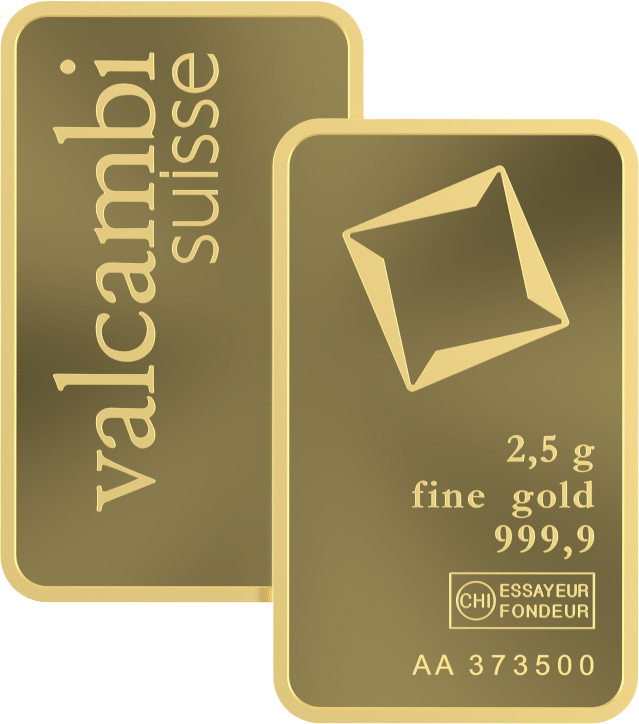
First-time buyers of gram-weight gold bars often receive their purchase and spend several minutes looking at the assay card trying to interpret what they are looking at. The sealed blister packaging from PAMP Suisse, Valcambi, Perth Mint, and Geiger each has its own format, typography, and layout — but every assay card communicates the same core information in the same logical structure. Once you know what to look for and what it means, reading any assay card from any refiner takes under ten seconds and tells you everything that matters about the bar you are holding.
This guide walks through every element of a gold bar assay card systematically — explaining what each marking means, why it exists, and how it protects you as a buyer. By the end, you will be able to evaluate any assay-packaged gold bar from any refiner with complete confidence.
An assay is a test or analysis of a metal to determine its composition and purity. An assay card — sometimes called a Certicard (PAMP’s proprietary term), assay certificate, or blister assay — is a sealed package that accomplishes two things simultaneously: it contains the gold bar in a tamper-evident enclosure, and it documents the bar’s specifications in a way that any buyer can read and verify.
The assay card is the gold bar’s birth certificate. It documents what was created, by whom, to what specifications, with what identifying number. When the assay card arrives at your door with its seal intact, you have documented proof that the bar inside has not been touched, tested on, or substituted since it left the refinery. The sealed condition of the card is itself an authentication statement — one that requires no external verification to interpret.
This is why serious precious metals investors keep their gold bars in original sealed assay cards. Once opened, the primary provenance documentation is broken. The bar still has value — the gold does not change — but the documented chain of custody from refinery to current holder is interrupted. For bars intended for IRA accounts, many custodians specifically require original sealed packaging. For resale, original sealed Certicards command better buyer confidence and faster transactions than unpackaged bars of identical gold content.
The most prominent element on any assay card is the refiner’s name and hallmark — the branded identity of the company that produced the bar. On a PAMP Suisse Certicard, “PAMP SUISSE” appears prominently alongside “Produits Artistiques Métaux Précieux” — the company’s full legal name in French. On a Valcambi assay, “VALCAMBI SUISSE” with the Swiss cross. On a Perth Mint card, the Perth Mint kangaroo hallmark and “THE PERTH MINT AUSTRALIA” with the government guarantee language.
The hallmark is not merely decorative branding. It is a legally recognized mark of the producing refiner — a commitment that the bar was produced to that refiner’s stated standards and carries their institutional credibility behind the specifications printed on the card. Counterfeit bars without this hallmark applied through the original production process are immediately identifiable as fakes by experienced dealers, who know exactly what genuine PAMP, Valcambi, and Perth Mint hallmarks look like.
Every assay card displays the metal type and purity specification. For gold bars: “GOLD” or “AU” (the chemical symbol for gold from Latin: aurum) followed by the purity expression. The two formats you will encounter:
Fineness: The most common format. “.9999” means 9,999 parts per 10,000 are pure gold — 99.99% pure. “.999” means 99.9% pure. “.995” means 99.5% pure. Most investment-grade gold bars are .9999 fine — including every PAMP Fortuna bar, Valcambi bar, Perth Mint bar, and Geiger bar we carry.
Karat: Sometimes displayed alongside or instead of fineness. 24 karat = .9999 fine. 22 karat = .9167 fine (used for Gold Eagles and Krugerrands but not for bars). The karat and fineness systems express the same information — purity relative to pure gold — in different numerical formats.
Understanding .9999 fine gold at a fundamental level clarifies why this purity standard is the market benchmark. At .9999 fine, only 1 part in 10,000 is not gold — trace elements from the refining process that cannot economically be removed further. This is the practical ceiling of commercial gold purity. Bars claiming higher purity (.99999 fine — “five nines”) exist but are specialty products for specific industrial applications, not standard investment-grade products. Read our guide to precious metals premiums to understand how purity relates to investment value and pricing.
The weight on an assay card is stated in the metric system — grams or kilograms — because the international precious metals industry standardized on metric weight for bar products. The weight you see on the card is the exact weight of the bar inside: “10g” means exactly 10.000 grams, “100g” means exactly 100.000 grams, “1000g” means exactly 1,000.000 grams (one kilogram).
Alongside the gram weight, many assay cards also display the troy ounce equivalent — because international precious metals markets price gold in troy ounces. A 10g assay card will often show “0.3215 ozt” (ozt = troy ounce) alongside “10g.” A 100g card shows “3.2151 ozt.” A kilo card shows “32.1507 ozt.”
If you are ever confused about which weight unit you are looking at — grams or troy ounces — look at the number. A 1 oz gold bar weighs approximately 31 grams, so a card showing “31.1g” or “1 ozt” is the same bar. A card showing “10g” and “0.3215 ozt” is a 10-gram bar. Never confuse the gram weight with the troy ounce weight — they express the same physical quantity in different units, and mistaking one for the other produces significant miscalculation. Our complete troy ounce guide covers all the conversions you need.
Every professionally produced assay card includes a unique serial number — a specific alphanumeric code assigned to this individual bar at production. The serial number serves three functions:
Individual identification. No two bars from any reputable refiner share the same serial number. Your specific bar can be identified uniquely by this number — distinguishing it from every other bar of the same weight and purity produced by the same refiner.
Registry verification. Some refiners — Valcambi and PAMP notably — maintain registries against which serial numbers can be verified. A bar claimed to be a Valcambi product can be cross-referenced against Valcambi’s authentication database using the serial number on the card.
IRA and insurance documentation. When gold bars are held in a Precious Metals IRA, the depository records the specific bars by serial number — ensuring your IRA holds the exact bars you purchased, not equivalent bars from the same refiner. When insuring a personal gold holding, serial numbers document the specific items insured. If a bar is stolen and later recovered or identified in secondary market circulation, the serial number connects it to the owner.
For the Valcambi 100x1g Gold CombiBar and PAMP 25x1g MultiGram bar, the single serial number on the card covers the entire multi-gram piece as one documented unit. Once individual sections are separated, the original card’s documentation covers only the remaining intact portion — another reason to keep the full CombiBar sealed until you specifically intend to use the divisibility.
The physical seal of the assay card is its authentication in material form. PAMP’s Certicard, Valcambi’s sealed blister, Perth Mint’s assay packaging — each is specifically designed so that any attempt to open, separate, or access the bar inside leaves visible, irreversible damage to the packaging. The seal is not a sticker that can be carefully removed and reapplied. It is a structural element of the packaging that must be destroyed to be opened.
When you receive a bar in original sealed assay: inspect the seal before opening. If the seal is intact, the bar has not been accessed since the refinery. If the seal shows damage, tearing, or evidence of opening and re-sealing — treat this as a significant concern and contact the dealer before proceeding.
Once you open the card yourself — to handle the bar, verify its physical characteristics, or access it for any purpose — the sealed provenance is broken. This is not a problem for bars you intend to hold personally without resale plans. For bars intended for IRA accounts, secondary market resale, or long-term storage where documentation integrity matters: keep the seal intact until there is a specific reason to open it.
When you receive any gram-weight gold bar in assay, verify these five elements in under a minute:
Five elements, five seconds each. Every bar from every refiner contains all five. This checklist works for PAMP Fortuna bars at any gram weight, Valcambi CombiBar, Perth Mint bars, Geiger bars, Argor-Heraeus bars, and every other assay-packaged bar in our gold bar collection.
Q: What is an assay card on a gold bar?
A: An assay card is the sealed packaging that contains a gold bar and documents its specifications — the producing refiner, the metal type, the purity (.9999 fine), the exact weight, and a unique serial number. It serves as the bar’s provenance document and tamper-evidence — if the seal is intact, the bar has not been handled since leaving the refinery.
Q: What does .9999 fine mean on a gold bar assay card?
A: .9999 fine means the bar is 99.99% pure gold — 9,999 parts per 10,000 are gold, with only 1 part in 10,000 being trace non-gold elements from the refining process. This is the highest commercial purity standard for investment-grade gold bars and is used by all major refiners including PAMP Suisse, Valcambi, Perth Mint, and Geiger.
Q: Why does the serial number on my gold bar matter?
A: The serial number uniquely identifies your specific bar — distinguishing it from every other bar of the same weight and purity from the same refiner. It is essential for IRA documentation (depositories record specific bars by serial number), insurance records, and resale verification. Record the serial number of every bar you purchase separately from the bar itself.
Q: Should I open my gold bar’s assay card?
A: Only if you have a specific reason to. The sealed card maintains the original provenance chain and is valued by IRA custodians, secondary market buyers, and insurance underwriters. Opening it breaks the seal permanently. For bars held in a Gold IRA, custodians typically require original sealed packaging. For personal holdings where you want to handle the bar: opening it reduces resale documentation but does not affect the gold content or value.
Q: What is a Certicard and how does it differ from a regular assay card?
A: Certicard is PAMP Suisse’s proprietary name for their sealed blister assay packaging format. It is functionally the same as other refiners’ assay cards — a tamper-evident sealed enclosure documenting the bar’s refiner, metal, purity, weight, and serial number — but the Certicard name and format are specific to PAMP Suisse products. Valcambi uses an equivalent sealed blister format; Perth Mint uses their own assay packaging. The documentation standards and tamper-evidence principles are consistent across all major refiners.

Investment-grade gold, priced with the live market and fully insured.
Prices, new stock and new guides. No spam.
Walk into the numismatic side of any serious precious metals conversation and you will encounter a vocabulary that
Inflation is not an abstract economic concept — it is the measured, documented erosion of what your money
Among the analytical tools that serious precious metals investors use, one stands out for its simplicity and its
Email us and a real person will help you choose the right gold for you.