
Guide
The Complete Guide to Gold and Silver Coin Grading
Walk into the numismatic side of any serious precious metals conversation and you will encounter a vocabulary that
Discover our collection of gold coins in a variety of weights, designs, and trusted mint options. Whether you’re investing, building your collection, or looking for a timeless gift, our gold coins offer a convenient way to own physical gold.
Discover our collection of gold coins in a variety of weights, designs, and trusted mint options. Whether you’re investing, building your collection, or looking for a timeless gift, our gold coins offer a convenient way to own physical gold.
Makes it simple to buy gold and precious metals with confidence. We offer a carefully selected range of gold bars, gold coins, platinum, silver, and other precious metals for investors, collectors, and anyone looking to own tangible assets.
Makes it simple to buy gold and precious metals with confidence. We offer a carefully selected range of gold bars, gold coins, platinum, silver, and other precious metals for investors, collectors, and anyone looking to own tangible assets.
Discover our collection of gold coins in a variety of weights, designs, and trusted mint options. Whether you’re investing, building your collection, or looking for a timeless gift, our gold coins offer a convenient way to own physical gold.
Discover our collection of gold coins in a variety of weights, designs, and trusted mint options. Whether you’re investing, building your collection, or looking for a timeless gift, our gold coins offer a convenient way to own physical gold.
Makes it simple to buy gold and precious metals with confidence. We offer a carefully selected range of gold bars, gold coins, platinum, silver, and other precious metals for investors, collectors, and anyone looking to own tangible assets.
Makes it simple to buy gold and precious metals with confidence. We offer a carefully selected range of gold bars, gold coins, platinum, silver, and other precious metals for investors, collectors, and anyone looking to own tangible assets.
Discover our collection of gold coins in a variety of weights, designs, and trusted mint options. Whether you’re investing, building your collection, or looking for a timeless gift, our gold coins offer a convenient way to own physical gold.
Discover our collection of gold coins in a variety of weights, designs, and trusted mint options. Whether you’re investing, building your collection, or looking for a timeless gift, our gold coins offer a convenient way to own physical gold.
Makes it simple to buy gold and precious metals with confidence. We offer a carefully selected range of gold bars, gold coins, platinum, silver, and other precious metals for investors, collectors, and anyone looking to own tangible assets.
Makes it simple to buy gold and precious metals with confidence. We offer a carefully selected range of gold bars, gold coins, platinum, silver, and other precious metals for investors, collectors, and anyone looking to own tangible assets.
Discover our collection of gold coins in a variety of weights, designs, and trusted mint options. Whether you’re investing, building your collection, or looking for a timeless gift, our gold coins offer a convenient way to own physical gold.
Discover our collection of gold coins in a variety of weights, designs, and trusted mint options. Whether you’re investing, building your collection, or looking for a timeless gift, our gold coins offer a convenient way to own physical gold.
Makes it simple to buy gold and precious metals with confidence. We offer a carefully selected range of gold bars, gold coins, platinum, silver, and other precious metals for investors, collectors, and anyone looking to own tangible assets.
Makes it simple to buy gold and precious metals with confidence. We offer a carefully selected range of gold bars, gold coins, platinum, silver, and other precious metals for investors, collectors, and anyone looking to own tangible assets.
Discover our collection of gold coins in a variety of weights, designs, and trusted mint options. Whether you’re investing, building your collection, or looking for a timeless gift, our gold coins offer a convenient way to own physical gold.
Discover our collection of gold coins in a variety of weights, designs, and trusted mint options. Whether you’re investing, building your collection, or looking for a timeless gift, our gold coins offer a convenient way to own physical gold.
Makes it simple to buy gold and precious metals with confidence. We offer a carefully selected range of gold bars, gold coins, platinum, silver, and other precious metals for investors, collectors, and anyone looking to own tangible assets.
Makes it simple to buy gold and precious metals with confidence. We offer a carefully selected range of gold bars, gold coins, platinum, silver, and other precious metals for investors, collectors, and anyone looking to own tangible assets.
Discover our collection of gold coins in a variety of weights, designs, and trusted mint options. Whether you’re investing, building your collection, or looking for a timeless gift, our gold coins offer a convenient way to own physical gold.
Discover our collection of gold coins in a variety of weights, designs, and trusted mint options. Whether you’re investing, building your collection, or looking for a timeless gift, our gold coins offer a convenient way to own physical gold.
Makes it simple to buy gold and precious metals with confidence. We offer a carefully selected range of gold bars, gold coins, platinum, silver, and other precious metals for investors, collectors, and anyone looking to own tangible assets.
Makes it simple to buy gold and precious metals with confidence. We offer a carefully selected range of gold bars, gold coins, platinum, silver, and other precious metals for investors, collectors, and anyone looking to own tangible assets.

Inflation is not an abstract economic concept — it is the measured, documented erosion of what your money buys. A dollar that purchased a specific basket of goods in 2000 purchases meaningfully less of that same basket today. The purchasing power destruction is real, cumulative, and compounds silently over time in a way that most people only notice when they compare prices to what they remember paying a decade ago. Physical gold’s relationship to this phenomenon is one of the most thoroughly documented relationships in economic history — and understanding it precisely, rather than through marketing slogans, is what separates investors who use gold effectively as an inflation hedge from those who buy it for the wrong reasons and are disappointed by the results.
Before examining gold’s role, the mechanism of inflation deserves a clear statement. Inflation is a general increase in the price level of goods and services over time — or equivalently, a decrease in the purchasing power of a currency unit. When a central bank expands the money supply faster than the economy’s productive output grows, more currency units chase the same quantity of goods. Prices rise. The currency’s purchasing power falls.
The critical implication for savers and investors: wealth held in cash or fixed nominal returns — savings accounts, certain bonds, money market funds — loses real value during inflationary periods. A savings account earning 2% annually in an environment of 5% inflation is losing 3% of real purchasing power per year. The nominal balance grows; the real purchasing power shrinks. This is the environment in which precious metals’ inflation-hedge properties become most relevant.
The case for gold as an inflation hedge is not theoretical — it is empirical and well-documented across centuries. The most commonly cited metric is the oil price comparison: in 1971, an ounce of gold bought approximately 15 barrels of crude oil. In 2024, an ounce of gold bought approximately 15–20 barrels. The nominal price of both commodities has risen dramatically in dollar terms across this period — but their exchange ratio has remained roughly stable. This is what “store of value” means in practice: not that gold’s dollar price is stable, but that gold’s purchasing power relative to real goods remains approximately constant across long time horizons.
A broader version of this analysis holds across most major commodity classes. The price of a tailored suit, a quality meal, an acre of farmland, an ounce of silver — each measured in gold, rather than dollars — shows significantly less variation over 100 years than the same prices measured in dollars. Gold does not make you wealthy relative to real goods over time. It prevents inflation from making you poorer.
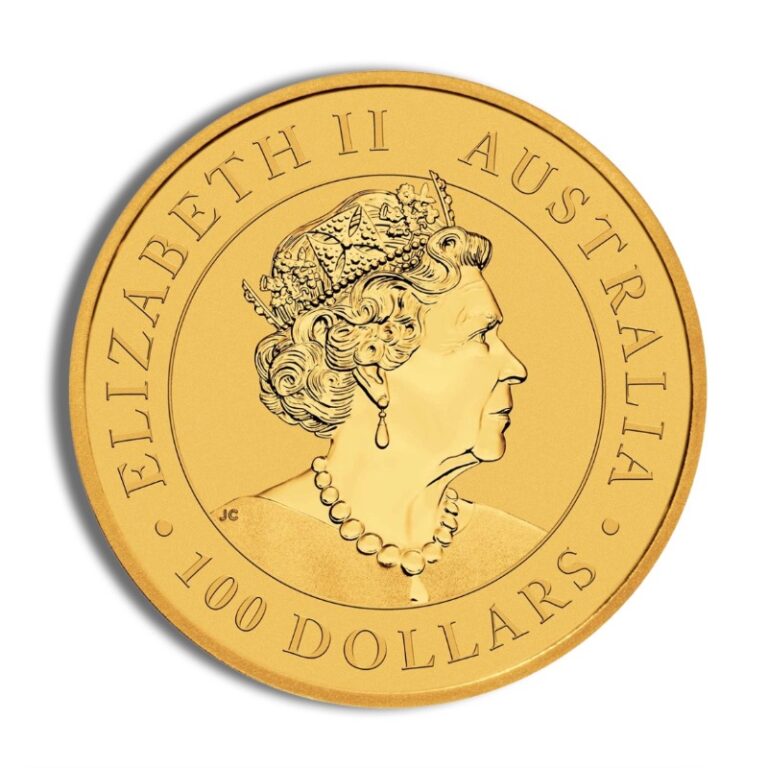
The most instructive recent example: 2020–2023. The US Federal Reserve expanded its balance sheet by approximately $5 trillion during the pandemic period. CPI inflation reached 9.1% in June 2022 — the highest in 40 years. During this period, physical gold provided a documented store of purchasing power that dollar-denominated cash holdings did not. Investors who held Gold Eagles, PAMP Suisse bars, and Gold Maple Leafs preserved purchasing power that cash savers lost to inflation.
Understanding why gold protects against inflation — not just that it does — helps investors use it correctly and maintain conviction during periods when the correlation is weaker.
Supply constraint. Gold cannot be printed. Annual mine production adds approximately 1.5%–2% to the above-ground gold supply — a rate that is structurally limited by geology and capital expenditure. When central banks expand fiat currency supply at rates exceeding this, the purchasing power of each currency unit falls relative to gold. This supply asymmetry — unlimited fiat issuance vs constrained gold supply — is the fundamental mechanic behind gold’s inflation-hedge property.
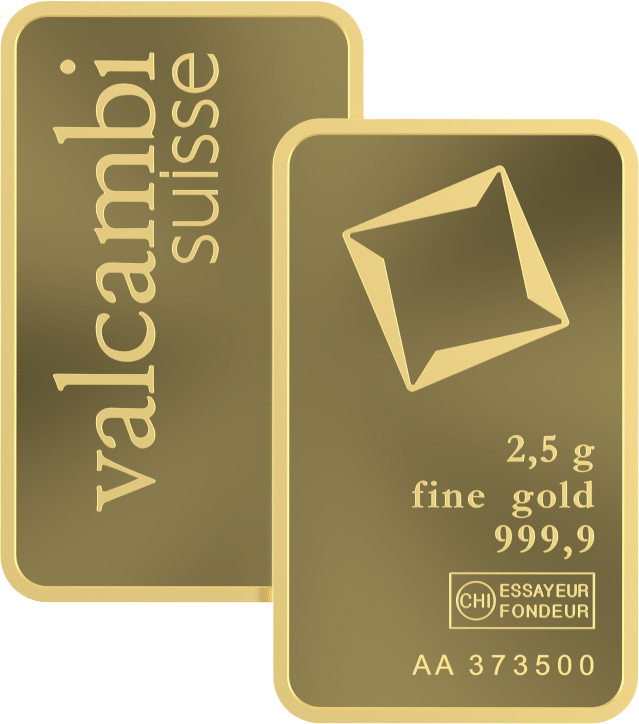
No counterparty. A physical gold bar from Valcambi held in your safe has no issuer who can dilute it, no institution whose solvency it depends upon, and no yield that can be eroded by negative real rates. This absence of counterparty risk makes physical gold specifically valuable in inflationary environments that are caused by or correlated with institutional or currency stress — exactly the conditions where counterparty risk in financial instruments rises most sharply.
Global monetary metal. Gold is recognized as a store of value across every culture, every economy, and every monetary system that exists. When confidence in any specific currency falls — during hyperinflation, currency crises, or sustained real negative interest rates — gold is the universal alternative that buyers in every country immediately understand. This globally recognized monetary status creates floor demand that currency-specific assets do not have.
Silver shares gold’s monetary heritage but adds an industrial demand component that creates a different inflation-hedge profile. In inflationary environments driven by commodity price increases — energy costs, raw material costs, industrial input costs — silver benefits from both its monetary demand and its industrial demand simultaneously. Solar panel production, EV battery manufacturing, and electrical infrastructure buildout all consume silver at scale. When the same inflationary dynamics that drive gold also drive industrial commodity prices, silver can outperform gold in percentage terms during the inflation-response phase.
The gold-to-silver ratio is a useful tool for calibrating the relative inflation-hedge allocation between the two metals. When the ratio is historically elevated — silver cheap relative to gold — tilting inflation-hedge purchases toward silver bars and silver coins can enhance the overall portfolio response to inflationary conditions. The Silver American Eagle, Canadian Silver Maple Leaf, and large-format 100 oz silver bars provide silver exposure in formats that maintain maximum resale liquidity alongside their inflation-hedge function.
Honest analysis of gold as an inflation hedge requires acknowledging its limitations. Gold is an excellent long-run inflation hedge — over decades and across economic cycles, the relationship holds robustly. It is a less reliable short-run inflation hedge — over quarters and individual years, gold prices can move independently of inflation rates, sometimes dramatically. During 1980–2000, gold lost most of its value in real terms despite positive inflation throughout the period, because high real interest rates made yield-bearing assets more attractive than non-yielding gold.
The implication for investors: gold protects purchasing power most reliably over long holding periods — five years or more. Investors who buy gold specifically to trade an inflation cycle over a 12-month horizon may be disappointed by short-term price behavior that does not correlate tightly with quarterly CPI readings. Gold held for a decade or more as part of a diversified precious metals position — alongside silver, platinum, and appropriate financial assets — has a documented track record of preserving purchasing power that shorter-term approaches cannot replicate. Understanding how to build a precious metals position from scratch provides the strategic framework for positioning precious metals as a long-run inflation hedge rather than a short-run trade.
For investors buying gold specifically as an inflation hedge, product selection should prioritize two factors: liquidity and premium efficiency. Liquidity — the ease and speed with which you can sell and receive market value — matters because an inflation hedge that cannot be quickly monetized when needed fails its primary purpose. Premium efficiency matters because gold paid in premiums is gold not accumulating as an inflation hedge.
Highest liquidity: Gold Eagles and Gold Maple Leafs at the 1 oz level — recognized by every dealer in every market, sellable immediately without authentication questions.
Best premium efficiency: 10 oz gold bars and kilo bars from Valcambi and PAMP Suisse — lowest per-ounce premium means maximum gold content for every dollar deployed as an inflation hedge.
Balanced approach: A combination of 1 oz Gold Eagles for liquid holdings and 10 oz gold bars for efficient bulk accumulation gives most inflation-hedge investors both dimensions. Read our guide on gold bars vs gold coins for the complete framework on this product selection decision.
Q: Does gold always go up during inflation?
A: Not always in the short term — gold’s correlation with inflation is strongest over multi-year periods, not quarter by quarter. Gold’s purchasing power track record over decades is robust: it has preserved real value across every major inflationary period in modern history. In any specific 12-month window, other factors — real interest rates, dollar strength, investor sentiment — can override the inflation relationship temporarily.
Q: Is gold or silver a better inflation hedge?
A: Both serve the purpose. Gold is the more stable, lower-volatility inflation hedge with stronger monetary demand drivers. Silver adds industrial demand exposure that can amplify returns when inflationary conditions include rising commodity and industrial input prices. A combination of both — calibrated using the gold-to-silver ratio — provides broader inflation protection than either metal alone.
Q: Should I buy gold coins or gold bars as an inflation hedge?
A: For an inflation hedge, gold bars at 10 oz and kilo level provide the lowest per-ounce premium — maximizing the gold content that serves as the actual hedge. Gold coins like the Eagle and Maple Leaf provide maximum liquidity when you need to sell the hedge. A combination of both serves most inflation-hedge strategies well. Read our gold bars vs gold coins guide for the full comparison.
Q: Can I hold gold as an inflation hedge inside an IRA?
A: Yes. A self-directed Gold IRA holds physical gold as an inflation hedge within a tax-advantaged retirement account structure — providing both the inflation protection of physical metal and the tax deferral of an IRA simultaneously. Eligible products include Gold Eagles, Gold Buffalos, and .9999 fine bars from LBMA-accredited refiners.
Q: How much of my portfolio should be in gold as an inflation hedge?
A: Most financial professionals who recommend precious metals as an inflation hedge suggest a 5%–15% allocation — enough to meaningfully offset inflationary purchasing power loss without overweighting a non-yielding asset. The appropriate percentage depends on your overall financial picture, time horizon, and inflation expectations. This is not financial advice — consult a qualified financial advisor for personalized allocation guidance.

Investment-grade gold, priced with the live market and fully insured.
Prices, new stock and new guides. No spam.
Walk into the numismatic side of any serious precious metals conversation and you will encounter a vocabulary that
Inflation is not an abstract economic concept — it is the measured, documented erosion of what your money
Among the analytical tools that serious precious metals investors use, one stands out for its simplicity and its
Email us and a real person will help you choose the right gold for you.