
Every experienced precious metals investor started from the same place: uncertain about where to begin, overwhelmed by the range of products available, and unsure whether to start with gold, silver, coins, bars, or some combination of everything. The internet offers no shortage of opinions — most of them written to sell a specific product rather than to give a new buyer a genuinely useful, honest roadmap. This guide does the latter. It covers the sequence that makes sense, the reasoning behind each step, and the specific products that give beginners the best foundation — not the most expensive products, not the most exotic, but the ones that build a position with the right combination of cost efficiency, liquidity, and educational value.
Step 1: Start With Silver, Not Gold
This is the advice that surprises most beginners — and the advice that experienced stackers overwhelmingly agree on in retrospect. The instinct is to start with gold because gold feels like the serious investment. But silver is the smarter starting point for three concrete reasons.
Cost of entry. At current prices, a 1 oz silver bar or 1 oz silver round costs a fraction of the cheapest gold coin. This lower entry cost lets you make your inevitable beginner mistakes — buying the wrong format, overpaying on premium, not understanding condition — without those mistakes costing you significantly. Your first few silver purchases are your education. The tuition is much lower in silver than in gold.
Volume teaches you things. Holding 20 oz of silver teaches you more about precious metals — how to store them, how to evaluate them, how condition affects appearance, what different products look and feel like — than holding one-twentieth of a gold ounce ever could. The physical experience of accumulating real weight in silver is part of what makes precious metals ownership meaningful and what turns a one-time purchase into a long-term practice.
Understanding premiums is easiest in silver because the premium spread across products is widest and most visible. The difference between a generic silver round at minimal premium and a Silver American Eagle at a higher premium teaches you exactly what premium buys — sovereign mint credentials, legal tender status, maximum resale recognition — in a context where the dollar difference is small enough to compare directly. This understanding transfers perfectly to gold when you get there.
Where to start in silver: buy 10–20 oz of generic silver bars or rounds for the lowest-premium silver experience, then add two or three Silver American Eagles to experience sovereign mint quality at the same weight. Browse our complete silver bar and round collection to compare every format.
Step 2: Add Your First Gold Once Silver Is Established
Once you hold 20–50 oz of silver and understand how the market works — how spot price moves, how premiums function, how to store and handle bullion — gold becomes the natural next step. The transition from silver to gold is not abandoning silver. It is building the monetary anchor of your collection while your silver position continues to accumulate alongside it.
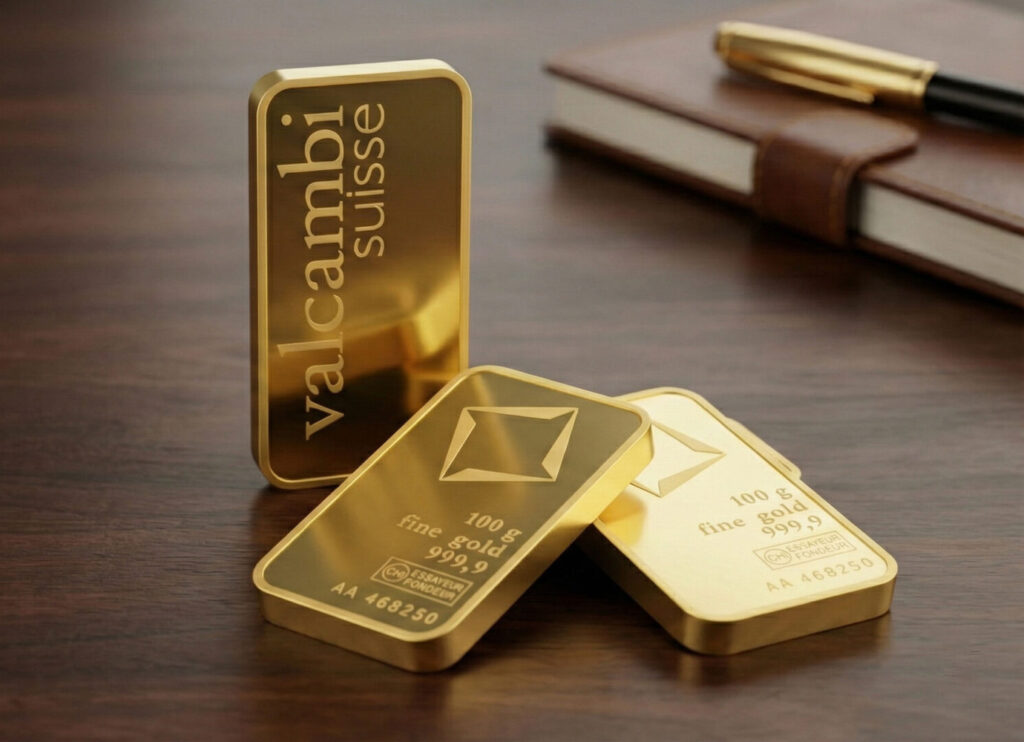
Your first gold purchase should be a 1 oz bar or coin. Not a gram bar — gram bars carry the highest premiums and teach you the least about the gold market. Not a kilo bar — that is a later stage acquisition. A 1 oz gold bar from a recognized Swiss refiner — Valcambi, PAMP Suisse, Perth Mint — gives you the investment-grade standard at the most competitive premium available in the 1 oz format. Alternatively, a 1 oz Gold Eagle or 1 oz Gold Maple Leaf gives you sovereign mint credentials alongside the gold content, at a slightly higher premium that buys legal tender status, IRA eligibility, and maximum North American resale recognition.
The honest question to ask yourself at this stage: am I buying for a Gold IRA or for personal holding? If IRA, a Gold Eagle or Gold Buffalo gives you the specific statutory naming that makes custodian processing straightforward. If personal holding, a Valcambi bar or Argor-Heraeus bar gives you the same gold at a lower premium.
Step 3: Build Both Positions Systematically Using Dollar-Cost Averaging
The most common mistake beginners make after their first few purchases is trying to time the market — waiting for a price dip, hesitating when prices rise, second-guessing their strategy based on short-term price movements. Professional precious metals investors overwhelmingly use a different approach: dollar-cost averaging — buying a fixed dollar amount of metal on a regular schedule regardless of spot price.
Dollar-cost averaging works for precious metals for the same reason it works for equity investing: it removes the emotional decision-making from the accumulation process, automatically buys more ounces when prices are lower and fewer when prices are higher, and builds a position over time whose average acquisition cost reflects the full range of market conditions rather than a single moment’s price level.
A practical beginner dollar-cost averaging framework: allocate a fixed monthly amount — whatever fits your budget — split between silver and gold. When the gold-to-silver ratio is historically elevated (above 80:1), tilt the allocation toward silver to take advantage of silver’s relative undervaluation. When the ratio compresses below 60:1, tilt toward gold. This ratio-informed allocation adds a systematic relative value component to a dollar-cost averaging discipline without requiring market timing.
Step 4: Add Platinum Once Gold and Silver Are Established
Platinum is not a beginner’s first purchase — but for collectors building a genuine multi-metal position, it is the natural third step after gold and silver are established. Platinum’s investment case is distinct from both: it is genuinely rarer than gold, currently trading at a historically unusual discount to gold, and positioned for structural new demand from hydrogen fuel cell technology that neither gold nor silver shares. Read our complete platinum vs palladium comparison for the full analysis.
For beginners adding platinum for the first time, a 1 oz Valcambi platinum bar is the most cost-efficient entry — Swiss LBMA-accredited platinum at the lowest per-ounce premium in our platinum collection. For IRA investors, the 1 oz Platinum Eagle provides the specific statutory IRA naming that makes custodian processing straightforward. The 10g Valcambi platinum bar provides a lower-cost entry point for buyers who want platinum exposure without a full-ounce commitment.
Step 5: Complete the Collection With Copper and Specialty Products
Copper and specialty products are the finishing layer of a complete collection — not investment anchors but meaningful complements that complete the multi-metal story and add dimension to what would otherwise be a purely financial position.
The 1 oz Copper Buffalo Round is the standard copper addition — the same Buffalo Nickel design that appears on our Silver Buffalo Bar and the Gold Buffalo in three different metals, creating a complete cross-metal thematic set. The Frontier Mint 10 oz copper bars in lots of 50 suit collectors who want copper in meaningful volume for gifting or educational purposes.
Arizona Goldbacks are the most distinctive specialty addition — real 24-karat gold in voluntarily circulating currency note format, representing a completely different relationship with gold than bars or coins. A complete Arizona denomination set from the 0.5 Goldback through the 100 Goldback is the most visually unusual precious metals holding available and tells a story about alternative monetary systems that standard bullion products cannot.
The Complete Beginner’s Sequence — Summarized
A practical roadmap for a collector starting from zero across 12–18 months:
Months 1–3: 20–30 oz of silver — mix of generic silver bars for premium education and Silver Eagles for sovereign mint experience. Focus on understanding how premiums work and proper storage.
Months 4–6: First gold purchase — one 1 oz gold bar or 1 oz Gold Eagle. Continue silver accumulation alongside.
Months 7–12: Systematic dollar-cost averaging into both metals. Monitor gold-to-silver ratio to inform allocation weighting. Step up silver bar sizes to 10 oz for lower premiums.
Year 2: Add first platinum piece. Consider Gold IRA or Silver IRA if retirement account diversification is a goal. Add copper and Goldbacks to complete the multi-metal story.
Frequently Asked Questions
Q: Should I buy gold or silver first as a beginner?
A: Silver first — lower cost of entry, higher volume for the same dollar amount, wider premium spread that teaches you the market, and lower stakes for the inevitable early mistakes. Once you understand the market through silver, gold becomes a natural and confident next step. Read our guide to buying silver online for the complete silver beginner framework.
Q: How much should I spend on my first precious metals purchase?
A: There is no correct number — start with what you can commit without financial stress. $100–$300 buys a meaningful first silver position. $500–$1,000 buys a more substantial silver foundation and leaves room for a first fractional gold piece. The amount matters less than starting and building consistency through regular purchases.
Q: Is it better to buy coins or bars as a beginner?
A: Both have merit. Bars carry lower premiums — more metal per dollar. Coins carry sovereign mint credentials, legal tender status, and wider resale recognition. For a beginner’s first silver purchase, generic bars at the lowest premium teach you the most about how the market works. For a first gold purchase, a Gold Eagle or Gold Maple Leaf provides the best combination of recognition, liquidity, and IRA eligibility for future use.
Q: How do I know if I’m paying a fair price?
A: Compare the listed price to the current silver or gold spot price and calculate the premium percentage. Check our guide to how premiums work for typical premium ranges by product type. Generic silver rounds should carry the lowest premiums — 5–10% over spot. Sovereign mint coins carry higher premiums — 15–25% for Silver Eagles. If a dealer’s premium is significantly above these ranges, compare elsewhere.
Q: When should I consider a Precious Metals IRA?
A: Once you have established a meaningful personal holding and understand the market well enough to make informed IRA product choices. The IRA structure adds custodian and storage fees that only make financial sense above a certain account value — most advisors suggest $10,000–$20,000 minimum. Read our Gold IRA guide and Silver IRA guide before opening any Precious Metals IRA.